

export and --env-file do not copy every variable into the sandbox. To pass
a host variable such as DATABASE_URL, set environment.env.DATABASE_URL to
${DATABASE_URL} explicitly.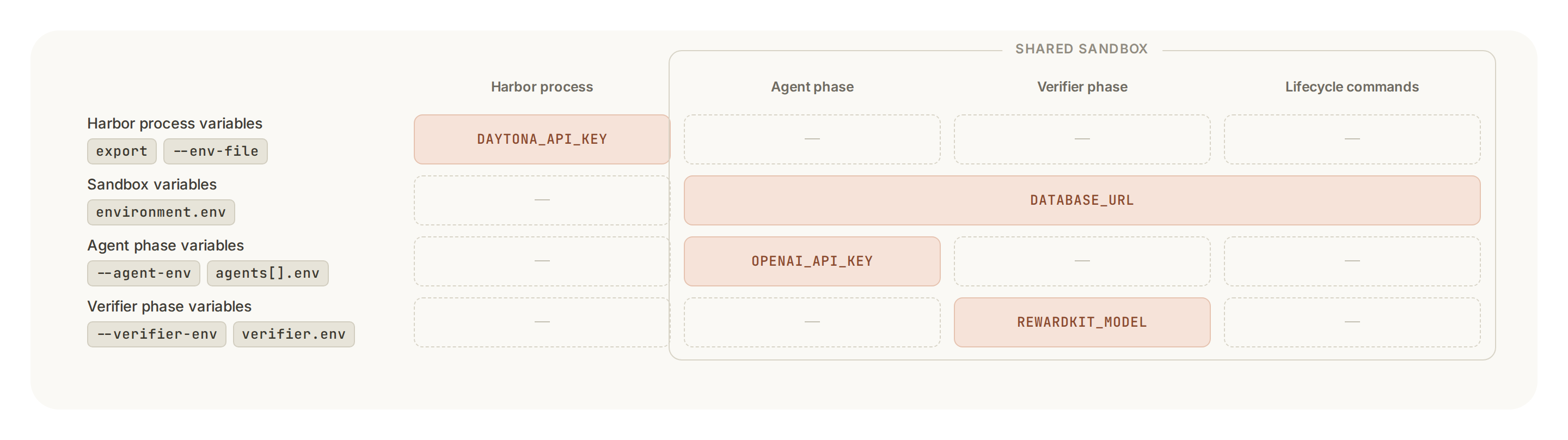
Environment variable scope for shared verifier
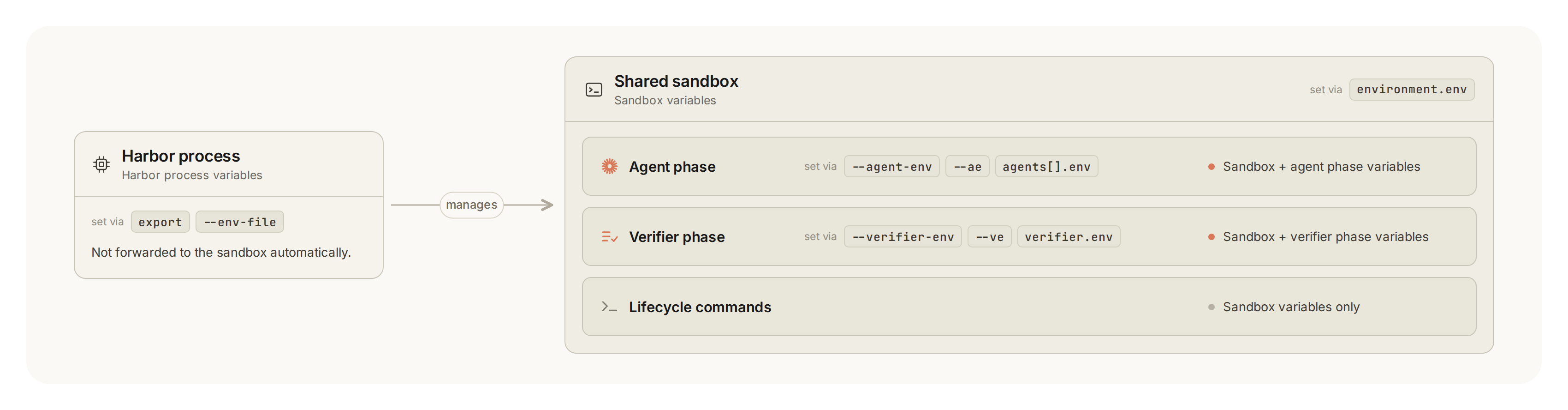
Environment variable architecture for shared verifier
OPENAI_API_KEY from the Harbor process and makes it available during the Codex
agent phase. This behavior is agent-specific; unrelated host variables are not
forwarded.
Common automatic agent credential forwarding
Common automatic agent credential forwarding
These host credentials are available only during the named agent’s phase.
Values passed with
--agent-env take precedence.Provider-dependent agents use Harbor’s provider credential
registry.
ACP registry agents do not use this automatic forwarding; pass their credentials
with
--agent-env. Other integrations may recognize additional variables; check
the agent implementation.